
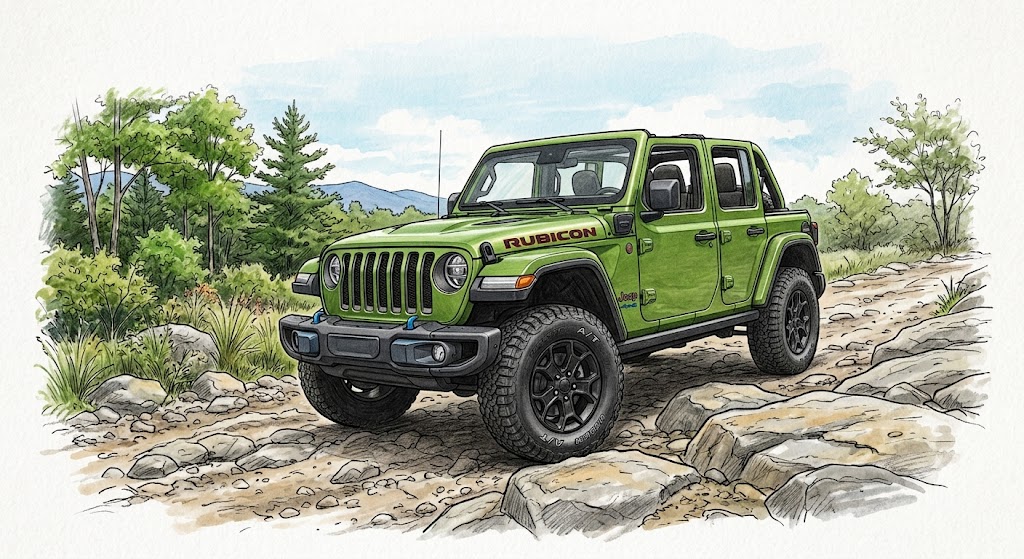
The 2024 Jeep Wrangler Rubicon 4xe is an impressive machine on paper. Combining instantaneous electric torque with classic Rubicon off-road capability—front and rear lockers, electronic sway bar disconnect, and a 4:1 low range—it feels like the ultimate trail rig for modern overlanders.
However, blending a high-voltage hybrid powertrain with rugged off-road hardware isn’t without its growing pains. After spending real time on and off the trail with the 2024 4xe, a few unique challenges emerge that every owner and prospective buyer should know about.
1. The Recall Cloud & Battery Safety Concerns
You can’t talk about the 4xe experience without addressing the elephant in the room: safety recalls. High-voltage battery pack issues have plagued the 4xe lineup across multiple model years, centered around internal battery cell separator defects that pose a potential fire risk.
For owners, this has meant dealing with repetitive recall cycles and interim safety directives—including official advice from Jeep to park outside away from structures and refrain from charging the battery until remedies are completed. Beyond the inconvenience, it temporarily strips away the very reason many bought the rig: charging up at home and running silent EV power on short commutes or low-speed trail crawls.
2. Electrical System & Aux Power Nuances
Even setting aside battery recalls, standard off-road setups rely on straightforward 12-volt systems where adding winches, auxiliary lighting, or dual-battery setups is well understood. The 4xe platform introduces a complex dual-voltage architecture: a 17 kWh high-voltage traction battery working alongside a standard 12V accessory battery.
- The 12V Dependency: Even with a massive propulsion battery under the rear seat, the vehicle’s onboard computers, relays, and starter systems still rely heavily on the conventional 12V battery. If that 12V battery drops voltage or encounters gremlins, the entire rig can refuse to start or enter safe mode, regardless of how much charge is left in the main hybrid battery.
- Wiring Heavy Accessories: Integrating heavy-draw components like high-amp winches, fridges, or high-output lighting requires careful planning around the 4xe’s Intelligent Battery Sensor (IBS) and charge control modules. Standard dual-battery setups don’t drop in as seamlessly as they do on a pure gas Wrangler.
3. Fuel & Oil Refresh Mode (FORM)
If you drive short distances on pure electric mode—especially during colder New England winter months—you will inevitably encounter Fuel & Oil Refresh Mode (FORM).
FORM is a system safeguard designed to run the 2.0L turbocharged gas engine to evaporate unburned fuel diluting the engine oil and prevent stale fuel buildup in the tank. When FORM triggers:
- Pure EV mode becomes unavailable until the engine reaches and maintains operating temperature for an extended period.
- Short trips won’t clear it easily, requiring longer highway runs or an early oil change if unburned fuel levels get too high.
While it is a necessary protective feature for the engine, it can be frustrating when you expect silent electric cruising and the gas engine forces itself on for days at a time.
4. Weight on the Trail
The 4xe hardware—the battery pack, electric motor-generators, and power electronics—adds roughly 500 to 700 pounds compared to a standard 2.0L or 3.6L Wrangler.
- Suspension & Clearance: That extra heft changes how the Jeep behaves on technical rock crawls or deep mud. You may notice more suspension compression, requiring careful tire pressure adjustments and spring upgrades if you load down the rear with heavy overlanding gear.
- Payload Capacity: Because the Gross Vehicle Weight Rating (GVWR) remains constrained, the net payload is lower. Adding steel bumpers, a heavy-duty winch, skid plates, and full camping gear eats up your available payload much faster than on a traditional ICE rig.
The Used Market: Deep Discounts vs. Platform End-of-Life
The combination of high-profile recalls, stop-sale orders, and shifting EV tax incentives has driven a sharp drop in 4xe resale values. Used and certified pre-owned 4xe models are currently trading at significant discounts compared to their original MSRPs.
The Good News for Bargain Hunters
If you’ve been on the fence about picking up a Rubicon 4xe, the steep depreciation works heavily in favor of secondary-market buyers. You can land a heavily optioned Rubicon with front/rear lockers and 470 lb-ft of instant torque for a fraction of what it cost new. If you confirm via the VIN that all open recall remedies have been completed by a dealership, it represents one of the most cost-effective entry points into a high-trim Wrangler on the market today.
The Warning: Jeep is Moving On
Before jumping in, it’s vital to recognize where the manufacturer stands. Parent company Stellantis has officially begun phasing out plug-in hybrid (PHEV) programs in North America, opting instead to shift focus toward conventional hybrids, range-extended electric vehicles (REEVs), and full battery-electric platforms (like the Recon EV).
The Wrangler line itself continues strong with standard gas engines, but the 4xe plug-in platform is being phased out. Buying a 4xe today means buying into a powertrain platform that Jeep is stepping away from, which could impact long-term aftermarket support, specialized dealership technical expertise, and ultimate resale value down the road.
The Verdict
Despite the electrical quirks and platform uncertainties, the Wrangler Rubicon 4xe remains a remarkably capable off-roader when everything is functioning as intended. That instant low-end torque without revving the engine makes technical rock crawling seamless.
For buyers willing to navigate recall checks, respect the demands of a complex hybrid power system, and accept the platform’s sunsetting status, the current market drops make the 4xe a unique trail weapon—provided you enter the deal with your eyes wide open.


